 |
|
|
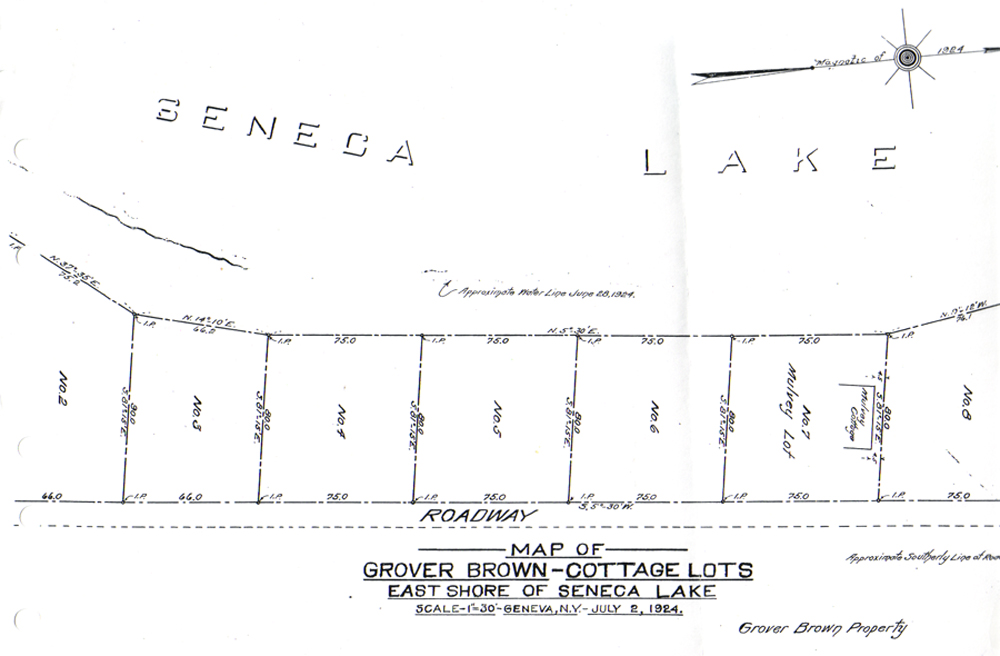
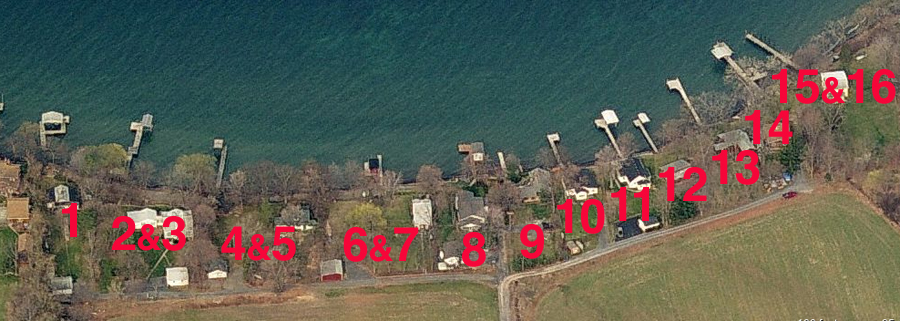
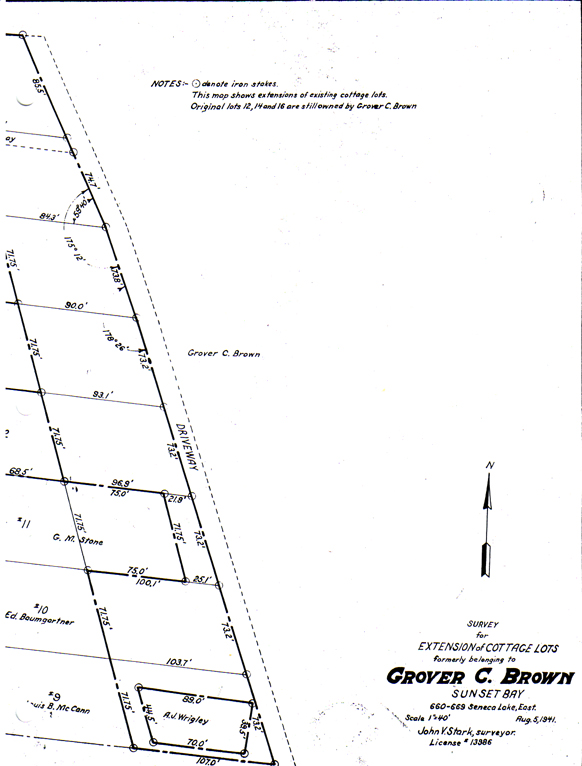
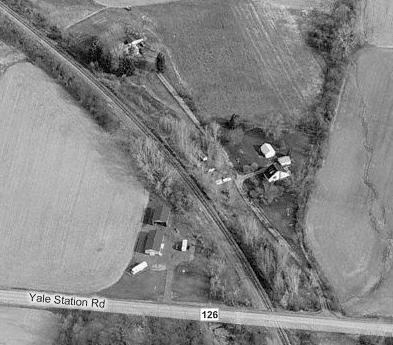
Farmhouse Restoration Photo Album || Historical Photos | The VanSickle Era | Printable Article PDF | History of Sunset Bay The northwest corner of the Town of Varick in Seneca County, NY has been a special place for generations. This group of homes will be celebrating its 90th year in 2014. Sunset Bay was originally known as ‘Grover Brown Cottage Lots’ in 1924. Earlier, it was part of Varick 'Lot 43.' Area History The bay was part of a much larger tract of land occupied by the Cayuga and Seneca Tribes of the Iroquois Confederacy. The Revolutionary War and its outcome had a large impact on land ownership in the region. A few years after the British surrendered in 1781, New York awarded land to Revolutionary War veterans after treaties were negotiated with Indian tribes. Nearly two million acres, stretching from the Syracuse area to Seneca Lake, were surveyed and allocated to soldiers in lot sizes determined by rank. The Central New York Military Tract in 1788 didn’t evolve as a clean method of military payment as many veterans had passed away and others sold segments of their claims to speculators. Sunset Bay was part of ‘Lot 43’ and the land’s title is a bit cloudy before abstract titles showed actual transactions. Early accounts mention that Edmund Kelly drew Lot 43. He served in the Second New York Regiment. He sold 200 acres to Benjamin Dey. The New Jersey Dey and Varick families had arrived as early settlers. Generations of these families were prosperous landowners in New York City and New Jersey and many of the sons were Revolutionary War veterans. Jane Dey married Johannis Varick and their son, Richard Varick became an officer in the American Revolution, George Washington’s secretary, New York City Mayor, and one of the founders of the American Bible Society. Colonel Varick was honored by his nephew, Anthony Dey, who, as the town’s first supervisor suggested the new town be named Varick when it was established in 1830. The Dey and Varick families continued to prosper in Fayette and Varick, as well as in their cities of origin. The Land and its Families The abstract of the land purchased by the Mulvey family shows decades of transfers, mortgages, subdivisions and boundary changes throughout the farm's history. Lot 43 had been owned by Benjamin Dey for some time, and he sold 200 acres to Powlers VanGieson of New Jersey in 1815 for $4,850.00. The large tract was divided among the VanGieson heirs when he passed away in 1840. In 1855 heir John VanGieson sold 105 acres to Garrett VanSickle. The southern section of Lot 43 was sold to P. Spence. It can be presumed that the VanGieson and VanSickle families built the large home that overlooks the bay. An interesting note involves Mr. VanSickle selling land to Lehigh Valley Railroad for $30.00 in 1890, eventually splitting Lot 43 into smaller sections because of the new railroad line. A railroad station was built on Lot 37, north of Yale Station Road, thus earning its name. By 1892, Varick Station was a stop on the Main Line, with passenger and freight service. The Yale Post Office was built as well. Mr. VanSickle died in 1898 after 43 years on Lot 43. His family sold the land to Henry Pond for $5000.00 in 1907. Two years later, Pond sold the land for $6,500.00 to Frederick Bloodgood. The property was mortgaged to William Young and LeVerne Leake who eventually sold it to Robert J. Burritt in 1916. The Burritts held the land for one year and sold it Grover and Carrie Brown in 1917. The Browns operated a farm of 125 acres for three decades. They had two children, Albert and Gertrude, and lived in the house that still stands on the east side of County Road 125. The farm consisted of livestock, cow barns, outhouse, pump house, garage, silo, pasture, tenant house and 100 acres of cash crops. The schoolhouse that was part of the military tract still stood and was used as a workshop. The Cottage Lots In 1924, Grover Brown hired a surveyor to subdivide the lakefront into sixteen lots, each approximately 75' wide and 80' deep. Lot #1 was located on the south border, with Lots #8 and #9 adjacent to the cottagers' right of way to the lake. Lot #16 was located on the north boundary. Before purchasing his first tractor, Mr. Brown used the right of way lane to the lake, as well as a lane between Lots #1 & 2 to water his two horses, named Harry and Nancy. He also gathered water for his livestock by backing a wagon loaded with water barrels into the lake. Original postal addresses ranged from numbers 660-676, the approximate distance (6.60 miles, etc), from the Geneva post office. Those numbers have since been changed to 4544-4600 Sunset Bay, Geneva, NY. The first sale was to Leo Mulvey, who purchased lot #7 in 1924 for $400.00. He chose that particular lot because of some stately elm trees that graced the property. He later purchased the adjacent lot #6 to expand the premises. The next lot sold was #8, to the Wrigley family. Over the next 20 years, the remaining lots were purchased by families, many from nearby Geneva, who built summer cottages. Few families owned automobiles when the bay was settled and East Lake Road was unpaved. Guests from Geneva reportedly used passenger service on the Lehigh Valley Railroad's Seneca Branch and hiked a mile to the lakefront from the 'Varick Station' on Yale Station Road. Gradually, more cottages were built. A common construction technique had been to frame the structures on wooden nail kegs filled with concrete and use the nails to build the typical one story structures. Some residences were winterized as year-round homes and remain so today. The residents, along with the Browns, chose the name Sunset Bay and placed a used hot water tank to mark the entrance and listed the residents' names. Children of the cottagers enjoyed playing in Mr. Brown's hay barn, driving his tractors, riding his horses and visiting the livestock, while avoiding the aggressive bull in the corral. He was gracious with his time and neighbors were welcome. His eyesight was failing due to an accident, and in spite of eventual blindness he was able to work the farm. In 1941, Mr. Brown agreed to extend the east boundaries by selling extension lots and moving the road. This explains the presence of telephone poles and power lines passing through the midpoint of the lots. After Mr. Brown’s death, Howard and Margaret Smith purchased the farm in 1948. The Smiths eventually adopted organic farming, a technique that avoids pesticides and is still used today. The next few decades were quiet ones in the bay, with the annual return each spring of the summer residents, generally from the end of June through Labor Day. Turnover among the twelve homes has been rare, with each summer place enjoyed by generations of the same family. In the 1930's the bay was active with (from south to north) the Keeler/Taylor, Chadwick, Gerard, O'Malley, Mulvey, Wrigley, McMahon, Baumgartner and Gilbert families. Swimming rafts moored along the waterfront were common features. In addition to the farm, other playtime attractions among the 'cottage kids' included the empty lots in the bay. The Wrigley cottage was available for rentals on a weekly basis and a few families eventually purchased lots after experiencing Sunset Bay life. In the1960’s the twelve family names included Keeler, Nicit, Lewis, Mulvey, Wrigley, Bond, Currie, Stone, Pearlman, Quigley, Shipos and Gilbert. Those same residences are currently owned by families named Brind, Wallace, Lewis/Oakleaf, Mulvey, Bollech, Bella, Nolan/Crawford, Stone, Hone, Quigley, Lynch/Tompkins and Gilbert/Doran. The flood of 1972, associated with Hurricane Agnes, wreaked havoc on the bay's docks and it took several weeks that summer for the lake level to recede to its normal level. Another flood in 1993 did more damage because of high winds during the flood conditions. A new invasive aquatic weed, known as milfoil, nearly choked the bay with its dense growth in deeper water. A significant change took place in 1998 when a town water district was formed, providing public water along East Lake Road as well as two fire hydrants. In 2005 the Towns of Varick and Romulus developed a sanitation system extending from the bay’s north end, serving every residence along the lakeshore to the southern point near Sampson State Park. The system eliminated the need for septic tanks as each home was connected to the 3” pipeline. Since 2000, a new mailbox base was erected by volunteers. 'Sunset Bay' received a road sign and was also designated as Fire Lane #14. When Howard Smith died, the farm was listed for sale, with the two fields east of the cottage lots listed apart from the main farm. In 2009, Jerry Wilks purchased the 100 acre Smith farm and built a home on its eastern boundary. In 2010, Jack and Bill Mulvey, Jr. purchased the 17 acres between the cottage lots and East Lake Road. In 2011 Anne Westcott, granddaughter of Leo Mulvey, Sr. purchased the farm's residence (formerly the VanGieson, VanSickle, Brown and Smith families' home) from Mr. Wilks with plans to restore it. The Grover Brown Cottage Lots and the farm on Lot 43 have meant a great deal to the many families who have called them home.
Bill Mulvey, Jr. • 2012
|
|||||||||||||
 |
|||||||||||||
 |
|||||||||||||
 |
|||||||||||||
 |
|||||||||||||
|
|
|||||||||||||
|
Atlas of Seneca County NY, 1874
Note Lot 43 in the northwest section of the town of Varick |
|||||||||||||
 |
|||||||||||||
 |
|||||||||||||
| Location of the Varick railroad station and Yale Post Office on Yale Station Road | |||||||||||||